

September 25, 2026
ECLARO Project E-Care: Small Gestures, Big Impact
“What’s your name?” And with those three simple words, a bond is made and a life is changed in a small yet immeasurable way.
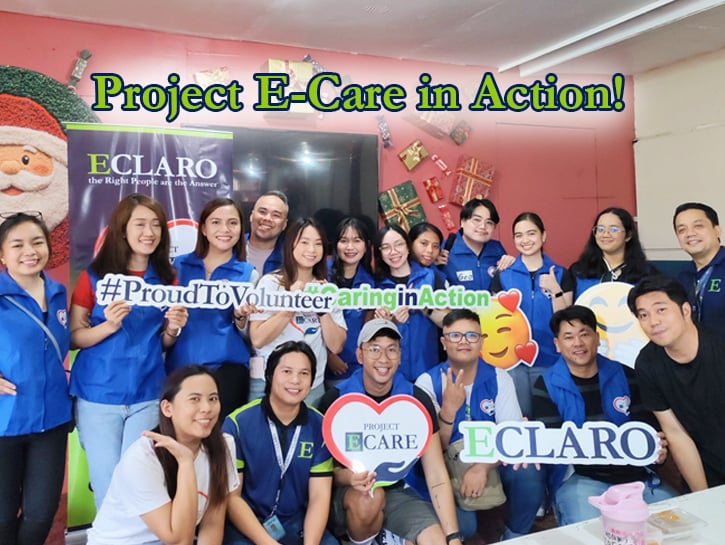
Sixty-two elderly residents call Good Samaritan Nursing Home in Marikina City their home, and throughout a recent Saturday they shared names and much more with ECLARO’s Project E-Care community outreach volunteers. That Philippines afternoon brought volunteers from all across ECLARO for a visit filled with singing, dancing and games, all designed to create lively and welcoming mood and foster an atmosphere for conversation and connection.
The smiles around the room reflected all that and something deeper.
A Home Built on Compassion
For many Filipino families, moving a parent or grandparent is something unusual, as entrusting their beloved grandparents into a nursing home is a hard decision to make, and not a usual “Filipino thing” to do. Filipino culture has long expected elders to grow old at home among their children and grandchildren, so many residents in facilities like this one arrived because those other scnenarios simply stopped being possible, especially in cases when a family moved abroad or there was no one left to look after them.
When those circumstances arise, Good Samaritan Nursing Home exists to give elderly individuals a safe place to live, where they are treated with love and respect. The caregivers handle daily needs with steady dedication, but when outside visitors come ready to pull up a chair and talk with the residents, to ask how their morning went or what their life looked like 50 years ago, the everyday becomes a bit brighter.
Being Heard, Being Seen, Being There
ECLARO recruiter Geoffrey Zingapan, who served as the program's host, has been doing outreach work since high school in Tuguegarao City. Relocating for his new job left him without the community organizations he grew up serving, and he felt the absence.
"Now that I am living away from my hometown and the organizations I used to be involved with, I realized how much I miss the sense of fulfillment that comes from serving others," he says.
Hosting this volunteer event kept him on his feet for most of the program, but he remembers best what happened when he was off the microphone. "One of the moments that impacted me the most was simply getting to know the beneficiaries by asking their names and ages and hearing a little about their stories.”
In long-term care, residents mostly hear their names called during routines like medicine schedules and mealtimes. When a stranger asks for it out of real curiosity, the question lands with more warmth than it might otherwise. Followed by a second question, it suggests that the visitor plans to stay a while. That there is a serious connection to be made.
Among the residents Zingapan met was a lolo, the affectionate Filipino term for a grandfather or elderly man, who is deaf. Older adults with hearing loss often pull back from group activities because following a conversation takes so much effort from everyone in it, but these visitors gave that effort gladly.
"Seeing how the volunteers patiently engaged with him and showed genuine compassion reminded me that even the simplest gestures can make someone feel seen and valued,” Zingapan says.
Wisdom Shared Over a Meal
Later, over lunch, Zingapan sat beside a lola (“grandmother”) who told him stories from her life, along with some of the lessons she had picked up along the way. That conversation was a reminder to him that outreach is also about "building connections, listening to people and learning from their experiences."
Elder care practitioners have a name for what happened at that table. They call it “pure reminiscing,” and they use it deliberately to ease loneliness in older adults and help them hold on to a sense of who they are. None of it calls for training or equipment. Anyone who asks a thoughtful question and waits for the whole answer is already practicing it.
Many Project E-Care volunteers, as it happens, spend their working days listening to individuals describe where they have been and where they hope to go. That instinct carried over at Good Samaritan, and their genuine interest in people and their stories resonated with each person they engaged.
Zingapan also brought a trained lens to these encounters as a psychology graduate and registered psychometrician, and he said that charitable work was a perfect as a place to put that training to good use, as it “deepens empathy and reinforces a responsibility to contribute to the well-being of others.”
Bingo!
For all his years in outreach, Zingapan had never visited a nursing home before. He was struck by how diverse the resident population was and even more by how eagerly they joined in. "I especially enjoyed seeing their enthusiasm during a game of bingo," he recalls.
There is a reason activity coordinators in elder care keep coming back to this class game. Nearly everyone already knew to play, and every number called gave the whole room something to react to at the same moment. A volunteer who felt shy about approaching someone decades older saw that a shared game card started the conversation for them. Then when the music came on lter, residents and volunteers were singing and dancing together, and the afternoon started to resemble a family reunion.
A Lolo Remembered
Although the focus was fully on the residents this day, Jesus Tan Jr., an ECLARO technical recruiter, noticed something about the volunteers.
"I was surprised because there were a lot of volunteers compared to the first one I attended," he says. The growth of Project E-Care’s numbers, however, did nothing to make the personal impact of this particular visit deeply meaningful.
Helping the residents brought back memories of his own lolo, whom his family cared for until he passed. Filipino volunteers in elder care settings often describe this same sensation. Plenty of them grew up with a grandparent in the house, and something as seemingly simple as guiding a resident to a chair can feel a great deal like caring for family at home.
Asked to describe the whole experience in one word, he chose "love."
Small Gestures, Big Impact
One word is sometimes enough. "Giving back is not always about doing something big," Zingapan says. "We can also be a force for positive change and be the right people to others.”
Like all the Project E-Care volunteers, Tan agrees, and cites a long-held belief that kindness finds its way back. "I always believe that doing good to others will someday return the good to you when you need it the most.”
Read more about ECLARO's Project E-Care here
Get ECLARO Insights and More Delivered Right to Your Inbox!